
 ©Touching the Light
Isolation Photography Exercises No 2 – Opening Up Seeing
Isolation Photography #2 – Opening Up Seeing
Adjusting to photographing at home? I am fortunate to have a garden, so I can at least get a dose of nature there if not on our permitted once a day exposure to exercise and air (but not people, folks, OK).
Today’s exercise begins the process of opening up, but in a mindful way that will stay with you. It’s not solely the preserve of being isolated, but since that issue is being rather enforced, we have the perfect opportunity to shift our thinking.
This is not about finding things around the house to photograph and setting them up, or about making photographs using preconceived ideas.
It is about noticing what we are seeing, and then stopping. It is simply to open ourselves up to seeing what is right here, right now, about retraining our awareness through daily practice.
In our Limited Space exercise, we first found a space and then observed, making twenty images. Now we are going to be guided by our observation, but it is essentially the same. DO this practice daily for at least a week.
Practice
At least once a day for at least a week:
- Bring yourself to a state of relaxed attentiveness – more to come on how to do that – with the purpose of paying attention and observing.
- Stand and turn through 360 degrees, noticing what you notice. Or you might walk around the house or garden, or down the street or path, letting your observation come to you. You might do nothing: just to sit and to BE is a luxury.
- When you do notice something, it probably comes momentarily – a Flash of Perception. When that happens STOP. You noticed it for a reason. Ask yourself what it is. “What exactly did I notice?” “What about it?”
- As before, de-label the object: see in terms of contrasts, colour, lines, shapes and forms, textures and patterns, relationships.
- Contemplate and BE with that for a short while.
- Then, when you understand, make a photograph that represents exactly what you noticed, no more, no less. Compose and expose carefully: your aim should be to make your photograph entirely in camera – no edits!
- Move on, maintaining your state of relaxed attentiveness until the next moment of perception. Repeat. But for no longer than half an hour at a time. Then have coffee; I find that my best energy comes in short bursts.
- Afterwards, remember that you saw every image that you made for a reason. Don’t judge it; accept it as a gift (but by all means learn any tech lessons … ) Its meaning will almost certainly emerge after the event.
- Over the course of the week, reflect on the images but also on the experience. What changes are you noticing in your feelings? In your attitudes to what makes a ‘good’ photograph?
Background Purpose
This exercise combines two forms of attentiveness:
- Open Monitoring
- Focused Attention
Open Monitoring allows us to become much more aware of our surroundings and has been shown to be highly effective in developing observational skills. We might start by noticing specific visual elements such as colour, opening channels one by one. Then, with the visual language of photography just behind our regular consciousness, we can bring ourselves to an almost permanent state of readiness, able to notice and make images in an instant.
Focused attention involves being with an experience for a longer time and more intimately, being curious, fascinated and accepting, exploring from all angles. Focused attention is effective in deepening our appreciation of detail, in tightening our compositions in camera and in appreciating more fully every experience.
Remember, this exercise is not about conceptualising; it is about responding to what we observe, as it is.
My dozen years of photographing every day have helped me to realise that photographs are everywhere, especially in places that are so familiar that we actually don’t notice them at all – like our houses. I have been asked many times what I find to photograph daily. And my answer is always that there is a photograph right here, right now, where we are standing having this conversation, if only we were open to see it.
This is not intended to be the start of a daily project for you, but if it nudges you there then that’s great. Daily practice has been the best thing I ever did for my photography and I am amazed still at how few do so. Gary Player, the golfer, said [sic] “It’s funny but the more I practice, the luckier I get“.
… Ken
March 2020
Reference: Michael wood and Andy Karr’s book “Seeing Fresh: The Practice of Contemplative Photography“, which contains many more formative ideas for this type of practice.
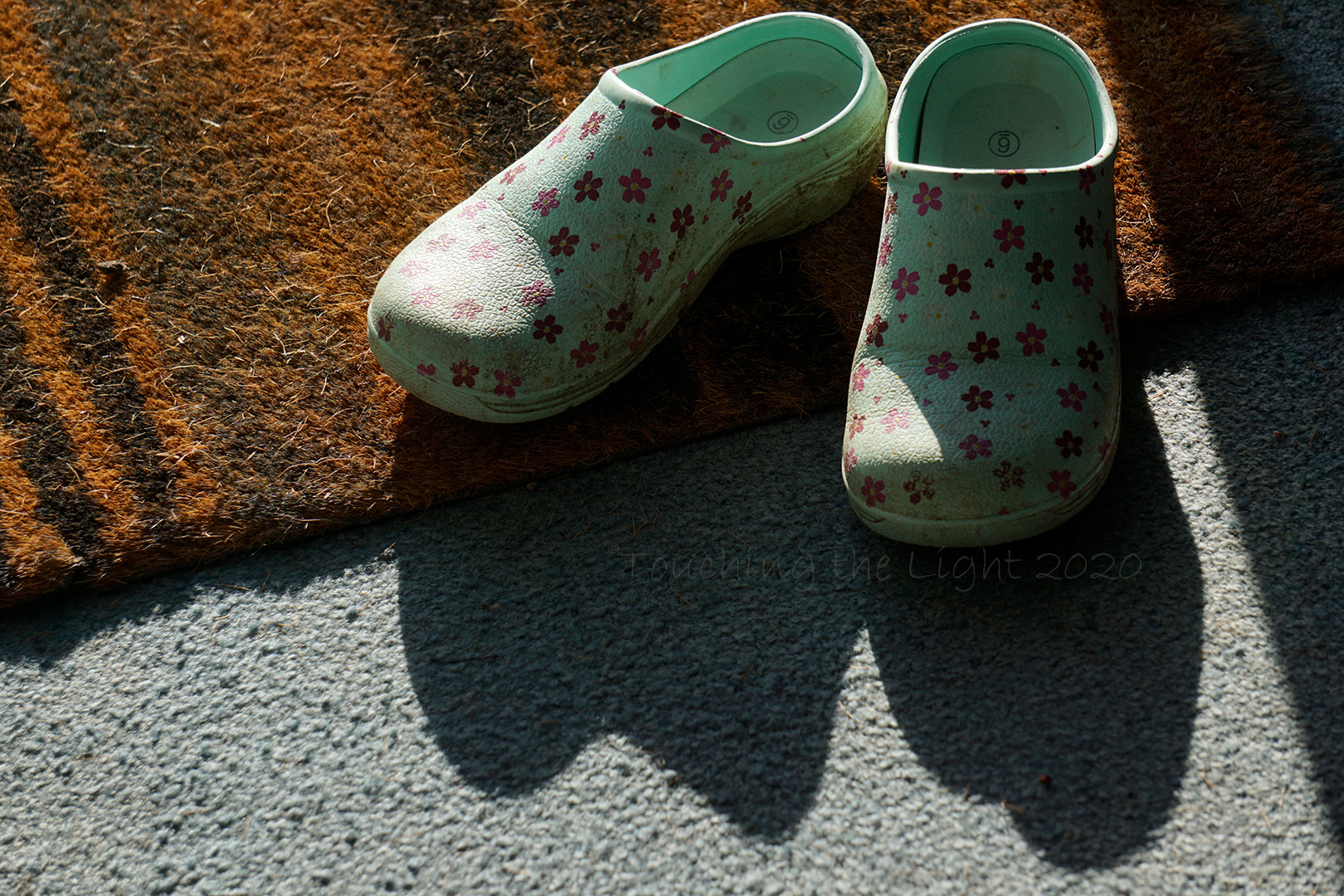
#4426 – 2020 Day 43: Carolyn’s garden shoes drying after a wet foray into the grass.
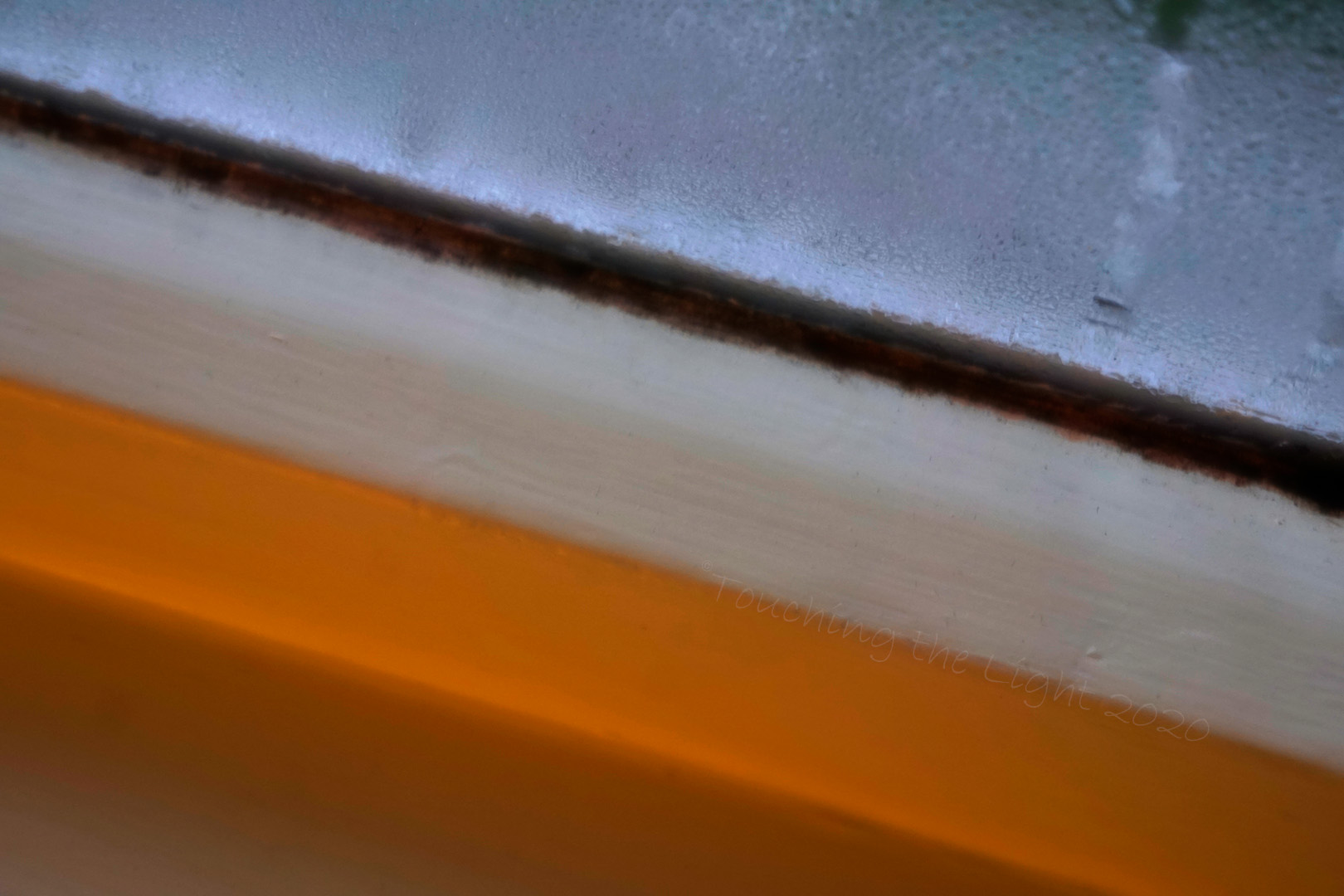
#4435 – 2020 Day 52: The outside of the coffee stop was shiny. The inside was not quite so …

#4439 – 2020 Day 56: I am constantly and still delighted by everyday moments of light that will never again recur in the same way …

#4450 – 2020 Day 67: Crossed lines. Confused?

 ©Touching the Light

 ©Touching the Light
 ©Touching the Light
Leave a Reply
Want to join the discussion?Feel free to contribute!